

Creating a progressive third party, part 2: The plan


In our last post, we talked about strategies progressives could use to take over the Democratic Party. We might find that they work, and we don’t have to start another party to reach our political goals. Or, we might find that what we can achieve within the party is just not enough. Or, the establishment Democrats might throw us out of the party.
If we decide to build our own party, we need a plan to maximize what works for us, and minimize what works against us, both to build the party and to work across the spectrum to create a better American political system. We can’t succeed at building any party without serious electoral reform.
Here are several situations coming up that will be inflection points. Let’s consider the best courses of action around them.
TIMELINE
Now-Nov 2026: Progressives get elected in midterms | Early 2027-Summer 2028: Launch of Dem agenda in Congress/states, Presidential Primary | Aug-Nov 2028: Presidential General Election | 2028-2032: Census-Reapportionment-Redistricting |
MAXIMIZING WHAT WORKS FOR US
Key issues like AI/data centers and corruption are uniting people from left and right against the establishment.
The Wall Street Journal, in a recent story called “Bernie, AOC and Bannon Can Agree on One Thing: the Fight Against Data Centers,” points out that ads against data centers are running in races from Senate and Governor all the way down to “a county-commissioner primary in Colorado.” More importantly, such ads are running on behalf of both Democrats and Republicans.
The fact that these hot-button issues pull people away from the establishment on both sides really weakens both parties, and helps build momentum for breakaway movements.
Growing support for independent candidates, electoral reform, and developing third parties.
Progressives will have lots of opportunities to build our movement in Washington and in the states from now through 2028.
2026: We need to leave it all on the field to support progressive, socialist and independent candidates, who can help lay the groundwork for future third parties’ power base.
2027: If Democrats gain control in Congress and states, DSA, progressives, moderate allies, electoral reform groups and even some right-wing change agents like Tucker Carlson can push for legislation that supports better politics and more parties. These policies are generally very popular!
We should be ready with some key 2027 priorities for the new Congress and for state legislatures, many of whom only meet in the first half of the year.
banning or limiting dark money
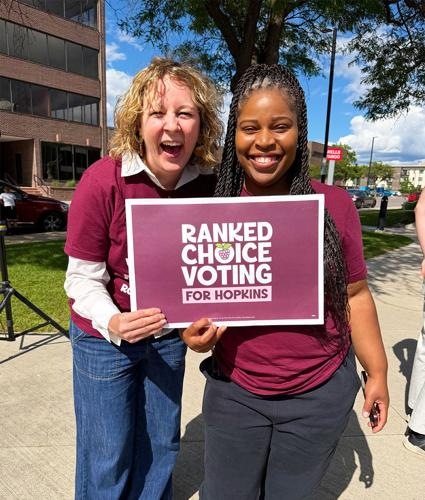
ranked choice voting/open primaries
public campaign finance
ballot access
fair maps
National Popular Vote
Ultimately, we need proportional representation. But we need to get a lot stronger before we can really take that battle on.

Presidential Primary: We should make a big push for candidates to take a “clean money” pledge and tie it to key policy planks like universal health care, action against monopolies and price gouging, raising wages, anti-AI and data centers, supporting unions, and climate action. Draw a sharp contrast between how we work for the people, and others work for their donors.
Presidential Primary: We should push the Dems to run a primary and convention process that takes the people’s will into account. Let’s say DSA’s Presidential candidate does well, and/or WFP is able to help make a progressive candidate a real contender.
Aug-Nov 2028: Presidential General: We’d have an opportunity to show the establishment how Dems can win the election by working with us and taking some big policy swings. Or, if it’s 2024 all over again and we can’t even get a speaker on Gaza at the convention, it could create momentum and support for us to create or spin off new parties sooner rather than later.
Progressives and DSA are winning elections
and building a mass base
2027-2028: We need to build on our success with a strategic growth plan. We must expand further in places and among people where we’re already strong, and establish beachheads where there is potential growth, especially in red areas and where election laws are helpful. DSA is on this with their Office Matching Funds program. They’ve helped launch new offices in 20 cities this year, including Birmingham AL, Tampa, Cleveland, Chicago and LA, and are expanding the program. WFP is in 18 states, and the two groups have cross-endorsed some candidates.
To really scale up, we’ll need more cooperation and coordination between DSA and progressive elected officials, organization allies, and rank and file. We’ll need more focus on goals, metrics, and fundraising.
It looks to me like there will be 8-10 DSA or DSA-endorsed members in the House come January, with at least a dozen strong progressives alongside. There are around 100 members of the Congressional Progressive Caucus (CPC). That includes Chair Greg Casar and Vice Chair Ilhan Omar, but also some people you wouldn’t really call progressive. It’s a great start, but we need a much bigger bloc to get any major policy initiative through the House, much less the Senate.
MINIMIZING WHAT WORKS AGAINST US
The Democratic establishment is panicking about the progressive/socialist threat to their power.

Some Democrats are trying to separate progressives from DSA by highlighting the more extreme parts of the DSA national platform, just like the pundits on Fox News do for the GOP. Clinton-era Democratic strategist James Carville doesn’t mince words, saying it’s “time for Democrats to talk the S-word: schism.”
DSA should promote a clear vision of democratic socialism that works for average Americans, rather than letting others define them as lunatics and Communists.
Progressives and socialists are working together well on electing candidates right now. But at some point they may need to come up with a joint vision they can both get behind, or have more separation.
Progressives and socialists do have allies among more moderate Democrats as well, like Sen. Chris Murphy, who says “this version of capitalism isn’t working” and “we need bigger ideas.” We need to work more closely with Chris and others to push back on those who want to silence us.
We have to find out if there’s a version of the Democratic Party that we could build with allies and feel good about. Even if there isn’t, having these relationships could help us fix the system and have a future as a “third party.”
The 2030 Census and subsequent redistricting could take away significant political power from “blue” states.
A terrific explainer of what’s at stake here comes from Votebeat, from whence I have excerpted the following info. The Census could land a blow to Democrats that could kill both progressive and establishment dreams of taking power.
The census is meant partly to determine how many congressional representatives and electoral votes each state gets (known as apportionment). The Constitution says that the census is to count “the whole number of persons in each State.” As courts have interpreted this, it means everyone is counted, regardless of their age, immigration or citizenship status, or eligibility to vote.
Republicans are fighting to add a “citizenship question” to the Census, and furthermore, to count ONLY American citizens when they use the data to apportion Congressional seats and draw political districts, possibly including state level districts.
If noncitizens were to be excluded, states estimated to have large populations of noncitizens — a red and blue mix that includes Texas, California, Florida, New York, and New Jersey — would lose House seats and electoral votes, or gain fewer than they would have otherwise. Those 5 states together represent more than a third of the population.
Census data also affects how trillions of dollars in Federal funding are allocated to states to improve health, housing, education, and other community services.
The Supreme Court may rule soon on the citizenship question. The battle over this whole matter is on now, and will continue for the next few years.
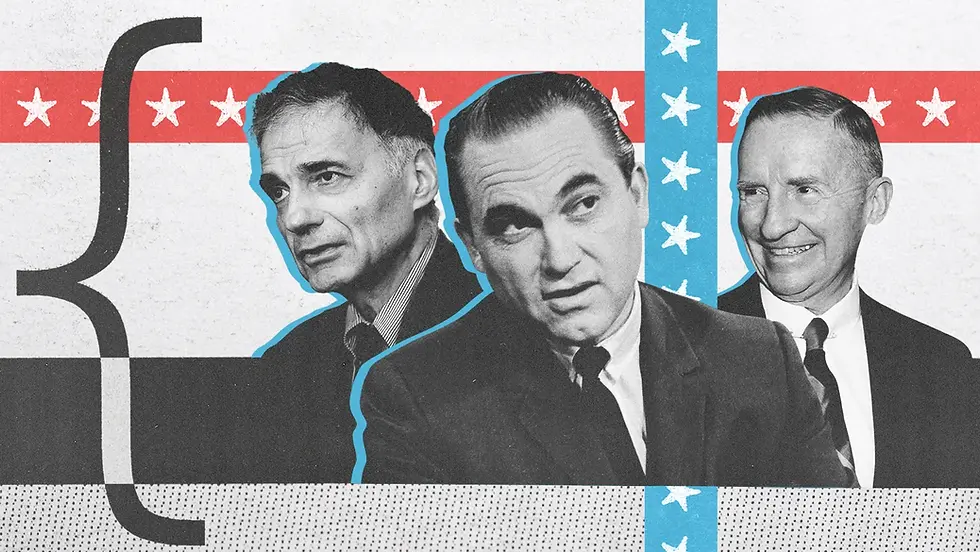
Americans have never believed in “third parties," as much as they hate
the two-party system.

To make them believers, we would have to do things differently than they’ve ever been done.
First, we need to show people that ‘third parties” DO work, which they do, all over the world. A recent story in Politico noted that “while cynicism about politics is widespread and persistent in [both the US and UK], British voters, with an array of political parties across the ideological spectrum, are willing to abandon their party in search of an alternative…but disaffected Trump voters have no real choice [in Nov].”
We need a marketing campaign that makes it real. Most electoral reform groups are afraid to get too political, and their efforts come off overly technical and emotionally flat.
I would get Canadians and expats from Europe and Asia to explain how and why they get more representation and better outcomes, like universal health care and free college, with their systems, and how they work in simple language.
Alternatives to the two-party system aren’t generally taught in American schools, even in political science programs, so we need an educational campaign.
But we also have to remember that we can’t get the system changed without buy-in across the political spectrum. Conservatives and moderates also feel unrepresented, and history shows that electoral reform is won only with broad coalitions. Such coalitions do exist, but they need to grow.
This won’t happen overnight. But it can be done. Often it seems like radical change breaks out overnight. But the groundwork was always being laid long before. If general conditions continue to deteriorate, the time for “third parties” could come sooner than you think. We must be ready.


Comments