

Progressives’ path to power: 4 strategies to win within the Democratic party


Progressive frustration with establishment Democrats is at a boiling point. As strategist Morris Katz said recently on Twitter, “Some people [us] are working to win a Dem majority. Others [them] are working to find another round of CEO funding to summon a 1,000-page policy alternative to Medicare for All.”
Reality check: right now, progressives are a minority faction within the Democratic party. What can and should we do to build our power and advance our progressive agenda within the party?
To win on policy, within and beyond the party, ultimately we need broader coalitions and more effective coordination focused on results. People are working to make this happen, but it will take time to bear fruit. If you’re ready to get moving, here’s four strategies we could work on now to help us get there.
Four strategies for building power
Elect more progressives up and down the ballot
Build our presence and power within state and local party organizations
Leverage our strength to influence party decisions around the 2028 Presidential election
Elect enough progressives to control wins and losses in a closely divided Congress
Progressives’ path to power: 4 strategies to win within the Democratic party
1. Elect more progressives up and down the ballot
How will this help us build our strength within the party?
It shows everyone that our candidates and ideas are winners. It builds our bench of candidates moving up to higher office, organizers, campaign staff, and policy experts. It builds our base of voters, volunteers and donors. It creates more voting power for progressives in the DNC and state party leadership, and can help move policy to the left.
The good news: 2026 feels much more hopeful on this front than 2024. NYC Mayor Zohran Mamdani, one of more than 200 DSA elected officials around the country, is inspiring people everywhere. And Run for Something, a powerhouse founded in 2017, has recruited and endorsed 408 “young, diverse, and community-rooted” candidates for state and local offices across 45 states in the 2026 election cycle so far. Since their inception, RFS has grown hundreds of thousands of candidates. They include independents as well as Democrats.
The bad news: Establishment Democrats are increasingly alarmed by our success and the prospect of losing control of the party. James Carville really hates NYC Congressional primary winner Darializa Avila Chevalier. Carville said he “can’t be in the same party as her,” and advised her to “form her own party.” Further, he says the Democratic Party should consider “a schism” from progressive Democrats. And he’s not alone.
2. Build our presence and power within state and local party organizations

How will this help us build our strength within the party?
It puts progressives in the room where it happens! It’s not for everyone. But if you can do the work and move effectively in that environment, you can build bridges with moderate Democrats, get to know the power players, and advocate for internal democracy and progressive policies. Bernie Sanders has always understood how important this is.
A post I saw on Reddit sums up the basics of getting involved. “I am a member of my county Democratic committee. This entails regularly attending meetings, canvassing my neighborhood, engaging in efforts to get out the vote, working outside the polling places on election days, circulating petitions for candidates, and attending party and candidate fundraisers. This also involves voting in local candidate endorsement votes and votes for county party leadership (my emphasis).” Experienced progressive operatives might be welcomed into higher levels.
3. Leverage our strength to influence the 2028 Presidential election process
How will this help us build our strength within the party?
With our electoral success and numbers among DNC membership, we can win more democracy and transparency in the Presidential selection process. This includes the primary calendar, the all-important platform, the rules on fundraising, and the rules on who gets to vote.
If/when progressive candidates win 2028 primaries, we must demand a louder voice in the nomination and the party’s overall strategy. If we use our power and help Democrats win the Presidency, we’ll be in a much stronger position to control more of the party and to win on our issues.
Right now this race is wide open, with any number of potential candidates, but no clear front-runner. The primary process will be a real test of our strength around the country. We must build on the base we’ve built in the past few years to turn out volunteers and donors in big numbers in 2028.
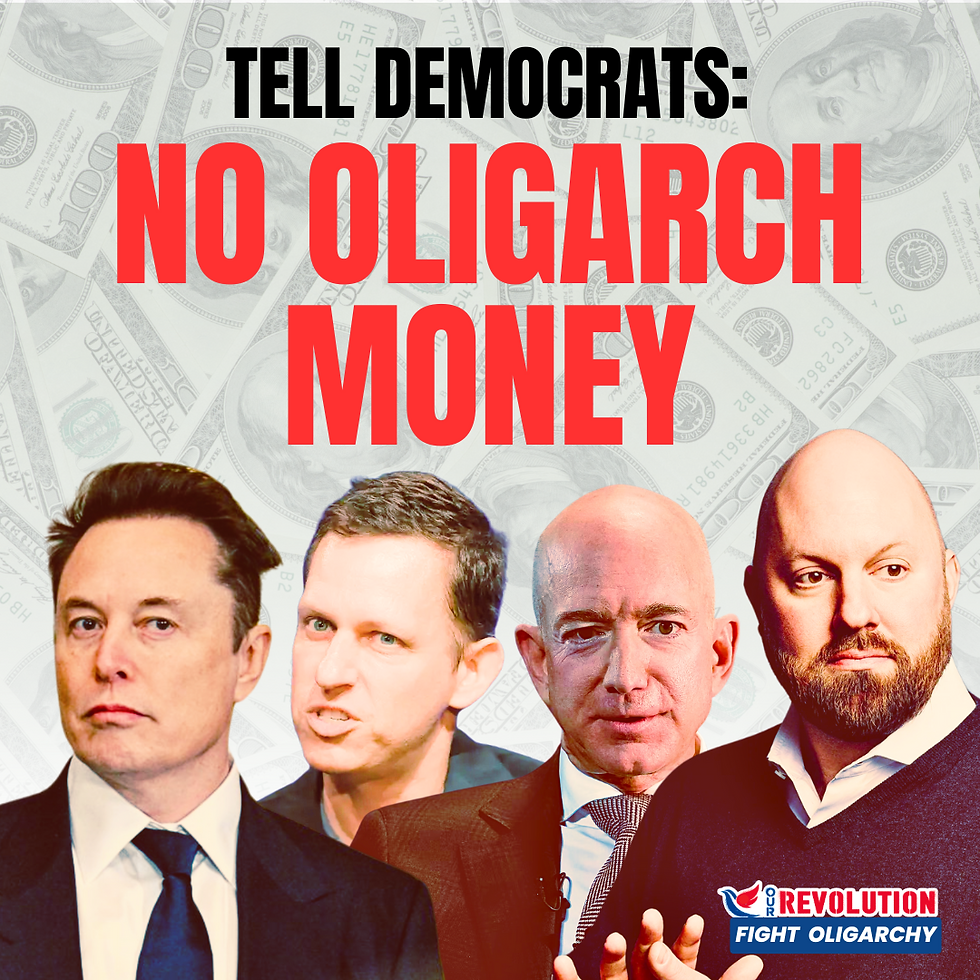
Establishment Dems are deeply worried about the DNC’s anemic big-dollar fundraising for 2028, while progressives want candidates who will say “no” to corporate and AIPAC money. There will be a battle around whose money we want and how we want to fight big money’s influence.
None other than former Trump chief strategist Steve Bannon says this about organized money vs. organized people:
“It’s not about the money. It’s about voter engagement by people, one on one. They [socialists] have momentum because they engage people with their message… Your [corporate] money is not only not going to help you, it is going to be turned against you. They [progressives] have been outgunned monetarily everywhere. It doesn’t matter.”
4. Elect enough progressives to affect outcomes in a closely divided Congress
How will this help us build our strength within the party?
Right now there are around five votes separating the GOP and Democrats in the House, and a similar number in the Senate. If Democrats flipped just a few seats to take the majority, just a few progressives could sink a bill, or force the party to make it more progressive, by collectively voting “no.”
William Daley, one of the Chicago Daleys and high-level staffer in the Clinton and Obama White House, wrote an op-ed recently about this prospect. He warns, “Socialists with outlandish, fringe platforms and no loyalty to the party are threatening to snatch control, much as the tea-party movement waylaid the GOP more than a decade ago and opened the way for Mr. Trump’s MAGA dystopia…Democratic leaders and rank-and-file voters must wake up and fight back.”
But what does “fight back” look like? Throwing money at establishment candidates? Throwing oppo at progressives? This hasn’t done much for them so far, as progressives have pretty much swept this year’s primaries. They could, if they got scared enough, start trying to throw progressives or socialists off the ballot, or the nuclear option - not allowing them to run as Democrats and splitting the party.
Axios notes that not all left-wing members want to take the Tea Party route, including the head of the Congressional Progressive Caucus (CPC), Greg Casar. He sees his group “as very different from the Tea Party and the Freedom Caucus … who I think in many ways were at war with their party.”
Longtime thought leader E.J. Dionne has a sunnier take on how we could make this relationship work. He notes that “the capitalist-versus-socialist debate obscures broad agreement among Democrats on all sorts of things. Suozzi Democrats and AOC Democrats alike want more progressive taxation; universal access to affordable health insurance, child care and housing; enhanced worker rights; climate action; and civil rights and voting rights.”
He concedes that the two have different ideas about how to achieve these goals, such as “establishing a single-payer health care system or building on Obamacare.”
But Dionne’s main point is that if Democrats want to win, they all need to focus on what Americans care about, not these abstract political terms.
Hopefully that focus will grow. Hopefully, when Dems are in the majority, they will focus on how to work together to win on those key issues that both progressives and moderates support. I predict that there are real pitched battles ahead before those common interests win, if in fact they do.



Comments