

Creating a progressive third party, part 1: The landscape

I’ve been invested in this idea for at least 25 years.
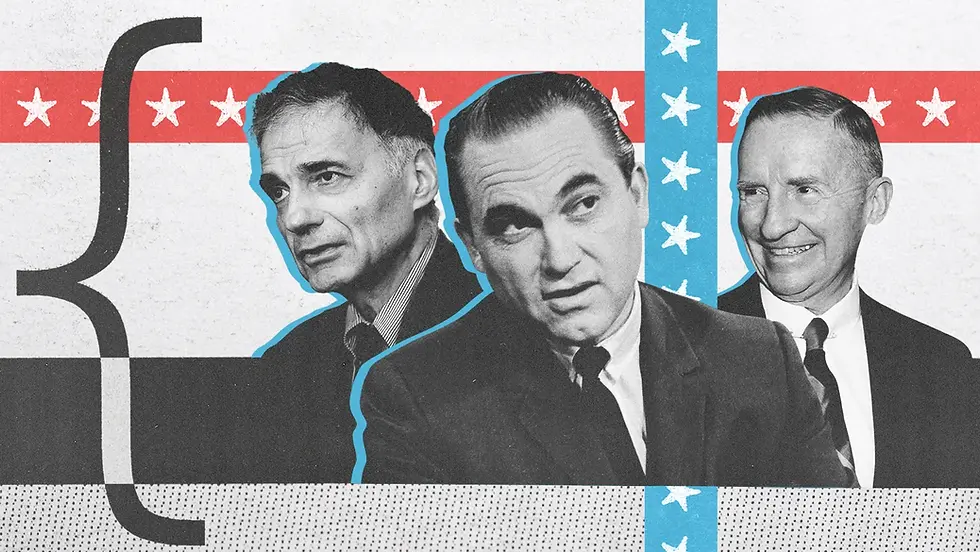
When I heard Ralph Nader’s anti-corporate message in 2000, I was all in. During my 14 years in the Green Party (2002-2016), I worked hard to build the party, including leading a national strategic planning process in 2013-14. I’ve also worked on electoral reform, helping to bring ranked choice voting (RCV) to NYC in 2019 and amplifying the people’s voice in the redistricting process and NY’s first “Independent” Redistricting Commission in 2020-2022.
THE LANDSCAPE
What aspects of today’s political landscape are working for and against us? Here’s the key aspects of the landscape to consider.
FOR US:
Key players supporting independent candidates and developing third parties
Progressives and DSA winning elections and building a mass base
Broad-based and growing energy around electoral reform
AGAINST US:
Democratic establishment panic about progressive/socialist threat
Public doubts about whether a “third party” could really work
Trump and GOP attacks on democracy threaten the entire system
Independents and “third parties”

Tucker Carlson, recently breaking with the GOP, said, “I’ve been a consistent defender for 35 years of the Republican Party, but there’s no defending this [the Iran war and support for Israel] because it’s immoral…And if I’m out, then I think a lot of other people are out, too.”
In fact, just now, Carlson, Marjorie Taylor Greene, Thomas Massie, and others had a meeting to plan to start a third party. It would be focused on an antiwar stance.
Also, former Sen. Joe Manchin announced a new organization aimed at recruiting and electing independent candidates, called the Independent Leadership Council (ILC). “We’re not trying to start another party,” Manchin said. Rather, he wants to help elect candidates “willing to work across party lines.”
Democrats in the mountain West are flying the independent flag too. Politico says it’s because “the party’s brand is so tarnished…that the “D” label provides no viable path to victory [my emphasis].” Dems are supporting strong independent candidates this year in Nebraska, South Dakota, Idaho, and Montana.
Progressives winning elections and building a mass base
DSA and the Working Families Party (WFP) often jointly support progressive and socialist candidates, and have won many primaries and elections.
DSA and progressives have also been involved in organizing beyond the ballot box, from fighting data centers, to local mutual aid efforts and ICE resistance, to supporting labor strikes.
Progressive policy positions are polling extremely well, including with a growing number of Republicans. Socialism itself gets a thumbs up from many Democrats in polls. I’ve covered these developments in depth on this blog.
Growing energy around electoral reform
Electoral reform
A recent NPR poll found remarkable openness to real change in our political system, including proportional representation. The changes below all have direct impact on the prospects for electing independents and growing “third parties.”
For a deep dive into our electoral system’s barriers against “third parties,” see this analysis I wrote for the Green Party.
Ballot access
New York and Massachusetts are among 39 states considering reforms that would enable more independent and “third party” candidates to run for office, including lower signature requirements, filing fees and residency requirements. Most states have much higher requirements for independents, compared to Dems and the GOP, to get on the ballot.
Public campaign finance
Polls show the vast majority of Americans oppose political corruption and strongly support getting big money out of politics.
According to Open Secrets, “14 states [currently] operate a public campaign financing program [and three more are considering it this year]. On the local level, 26 municipalities operate public financing programs, 11 of which were enacted in the past decade.”
Ranked choice voting (RCV)
Rank MI Vote has gotten RCV passed in several Michigan cities of late. In the past year, they’ve “proudly attended the MI Republican, Democratic, and Libertarian state conventions, meeting voters from every political background and [talking about] RCV as a nonpartisan reform.” The GOP is hip to the danger RCV could pose to business as usual, and has made opposition a priority. 19 states now have laws restricting the use of RCV.
Open primaries
Open primaries put candidates from all parties/no party up against each other, allowing independents to participate. CA’s top-two “jungle primary” is an example. A better plan is the “top four plus RCV” system in Alaska. As it happens, Elon Musk has poured money into Alaska to oppose their open primaries, as well as their rules on campaign spending disclosures.
Proportional representation
In the short term, DSA and WFP have chosen the most effective path to winning elections today, which is within the Democratic Party. National DSA does support proportional representation, which would “allow third parties to be more competitive, and provide a path to dismantling the two-party system.” Most other countries use some type of PR and have more than two parties.
Some people are now talking about “politically achievable proportional representation,” by which they mean a system that allows our two parties to stay in power to some degree. The Prospect has an excellent article on this. Congress could do it without a constitutional amendment, through the Constitution’s Election Clause.
For example, we could retain the existing 435 single-member districts and expand the House by one-third, adding 145 seats. The current seats would be elected as they are now, and the new group of 145 seats would be proportional.
Peoria, IL, has a system like this. There they have ten City Council seats. Five are elected in districts, and five are elected at-large for the whole city. This could allow independent or “third party” candidates to win an at-large seat if they got 20% of the vote.
Against Us
Dem establishment panic about progressive/socialist threat

Party elders like Jaime Harrison and James Carville are opposed to democratic socialists running as Democrats. Harrison has said, “Don’t use our resources. Don’t rely on our volunteers. Don’t use our infrastructure. Focus on building the party you actually support.”
Centrist dark-money group Third Way is “going to war” against socialism, announcing a $15 million campaign against DSA. They plan to “make progressives understand the risks” of more controversial elements of the DSA platform. They also plan on “recruiting and arming a group of young, diverse spokespeople to fight the DSA from a center-left perspective.”
There are also some reasonably progressive Democrats, like Sen. Chris Murphy, who feels it’s good for the party to have “a contest of ideas” and that the “current version of capitalism cannot be sustained.”
The conflict is real and will only get hotter. If Democrats take control of the House and/or Senate by a slim margin in 2027, this could give progressives/ DSA the ability to kill legislation with just a few votes. This prospect definitely keeps the establishment up at night.
Public doubts about whether a “third party” could really work
I wish I had a nickel for every time I’ve read or heard that people are ready to vote for a “third party.” When push comes to shove, these people almost always succumb to the establishment’s warnings that voting “third party” only helps elect the other side. Winning electoral reform AND a sustained and effective campaign to get enough people to believe a "third party" is worth supporting would both be necessary. The "third party" would also need to be really appealing in and of itself.
The fact is neither DSA’s electoral program nor WFP have challenged the two-party system. If they took that step, we would be playing a different game.
Trump and GOP attack on democracy threatens the entire system
Perhaps it goes without saying that the wide-ranging attacks on democracy, from the Save America Act to the effort to pull ABC’s TV station licenses, threaten Americans across the political spectrum and our entire political system. One can only hope that the concept that “nothing unites people like a common enemy” will come into play even more now. The Save America Act may be the only thing that has inspired Congress to really say “No” to Trump.
Hard to say how close we’ll come to actually falling into a totalitarian state. But if we win that battle – starting with the midterms – there’ll be a wider opening for more dramatic, systemic change in our political system, as well as other areas.


Comments